


Community—Your Untapped Self-Care Superpower
Updated: Oct 20, 2025
The 8 Pillars of Self-Care Series: Pillar 8

This is the final installment of our Practical Self-Care series. Mastering just one small step at a time can be transformative. I am so glad you've joined me here!
We often discuss self-care in the context of solo acts: the quiet bath, the solo workout, or the perfectly zoned-out meditation session. And those things are crucial. But if you've been following our "Pillars of Self Care" series, you know that true, sustainable adulting self-care is a multi-faceted project.
Did you know that connecting with others is one of the most powerful things you can do for yourself? Even introverted people need social connections from time to time.
The Biological Need to Connect
Humans are social creatures. This isn't a motivational poster platitude; it's a deep biological truth.
When you nurture healthy, supportive connections, your brain releases feel-good hormones, such as oxytocin (the bonding hormone) and dopamine (the pleasure and reward hormone). Strong social ties have been scientifically linked to a range of benefits, including lower stress levels, a reduced risk of depression, a stronger immune system, and even a longer lifespan.
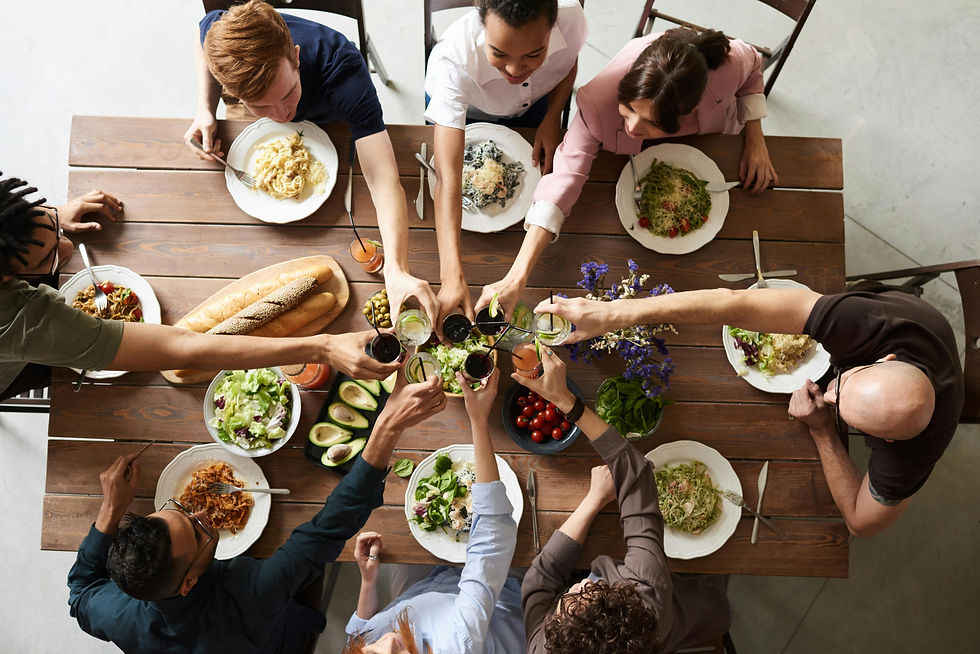
In fact, the opposite of connection—loneliness—is now recognized as a serious public health risk. Studies have found that the negative health effects of low social interaction can be similar to smoking 15 cigarettes a day or being physically inactive, significantly increasing the risk of premature death, heart disease, and stroke. [1, 2]
So, when you make time for that coffee date, join that book club, or show up for a volunteer shift, you're not just being nice to others—you're actively and powerfully caring for your physical and mental health. This is essential self-care disguised as a social outing.
Choosing Your People: The Power of Intentional Community
The beauty of adult friendships and community is that you get to choose them. Unlike family (which we discussed in a previous pillar), your friends, your neighbors, your colleagues, and the people you gather with for your hobbies are the ones you’ve intentionally invited into your life. The people we choose to surround ourselves with can become a powerful support system.
But "choosing your people" is an active verb. Here's how to move beyond passively waiting for invitations to build an intentional, supportive circle:
1. Identify Your Energy Sources
Ask yourself: Who leaves me feeling energized and inspired? Who do I feel totally comfortable being my authentic self around? Make those people a priority. Don't waste your precious social time on connections that feel draining, obligatory, or make you doubt yourself.
2. Seek Out "Soft Community" in Your Own Backyard
True connection often starts with community adjacency—being in the same space as other local people without the pressure of forced conversation. This is how deep roots are formed.

Don't underestimate the power of simply existing in shared spaces. Wander through public gardens, local parks, and museums. Rediscover your local library, which is now a hub for everything from community events to resource centers, offering so much more than books. Festivals and pop-up markets where you buy handmade wares put you face-to-face with local artists and crafters.
And sometimes, your connections are quite literally right next door. Some of my friendships and even my current companion came from walking my dog in the neighborhood. My dog became my friendly, fuzzy social magnet. After each of us experienced profound loss, grief, and loneliness during the pandemic, my companion and I formed a beautiful life together, all because our dogs insisted on pulling us toward each other.

Intentionality is great, but sometimes, the best connections are just showing up where you live.
3. Be the Initiator
Adulting is busy, and we often forget that everyone else is just as swamped and probably feeling just as awkward about reaching out as we are. If you want to see someone, send a text. Suggest the date. Plan the gathering. Practicing this proactive muscle is key to a robust social life.
Practical Adulting: Boundary Setting in the Social Sphere

Here's where the self-care part of this pillar gets tricky. You've heard us say it before:
Practice Healthy Boundaries.
Nurturing your social connections means protecting the quality of those connections, not just the quantity. You cannot pour from an empty cup, and sometimes, social obligations are what drain your energy the fastest.
Remember these two non-negotiables:
The Right to Decline
It is perfectly acceptable to decline an invitation without giving an elaborate excuse. Your mental health is a good enough reason. Practice this simple phrase: "Thank you so much for the invite, that sounds great, but I'm going to need to take that night for myself." End of discussion.
The Right to Disconnect
If you are at a social gathering and you suddenly feel overwhelmed, you have the right to leave. You don't have to wait until the bitter end. A quick, polite exit is a sign of self-respect, not rudeness. Protect your peace.
The truth is, a high-quality, supportive community will respect your boundaries because it understands the need for self-care. Your community is your net, your cheerleading squad, and your refuge. Treat it with the care and intentionality it deserves, and it will be your most powerful ally in your adulting journey.
What's one thing you can do this week to show up in a shared local space, like a park or a library, and nurture a meaningful connection in your life? Let us know in the comments!

Resources for Connection & Community
Ready to put this Pillar of Health into practice? Here are a few tools and resources:
Meetup: An essential app/website for finding groups based on shared interests (e.g., hiking, coding, book clubs, board games).
The Campaign to End Loneliness: A great resource for understanding the issue and finding practical ways to build connections.
Your Local Library Website: Beyond books, check their calendar for workshops, community resource fairs, and public classes—the best hubs for local interaction.
Volunteering: Sites like VolunteerMatch can connect you to organizations where you can work with others toward a shared, meaningful goal.
What's one thing you can do this week to show up in a shared local space, like a park or a library, and nurture a meaningful connection in your life? Let us know in the comments!
References:
[1] Holt-Lunstad, J., Smith, T. B., & Layton, J. B. (2010). Social relationships and mortality risk: a meta-analytic review. PLoS medicine, 7(7), e1000316.
[2] Murthy, V. H. (2023). Our Epidemic of Loneliness and Isolation: The U.S. Surgeon General's Advisory on the Healing Effects of Social Connection and Community. U.S. Department of Health and Human Services.
P.S. Ready to tackle the other pillars of health? Check out our previous article on Family Relationships here. You can read about all 8 Pillars of Practical Self-Care here.


Comments